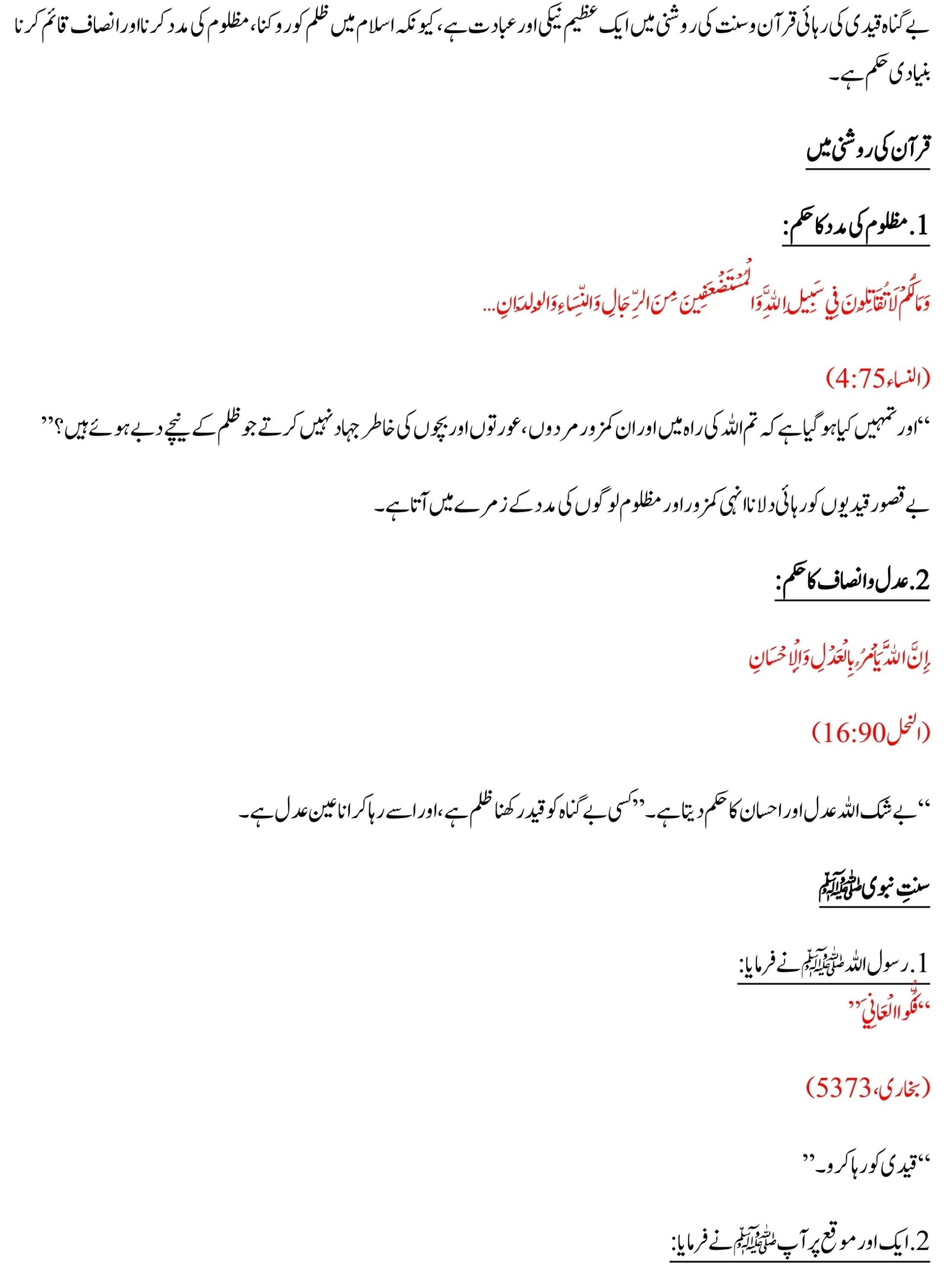
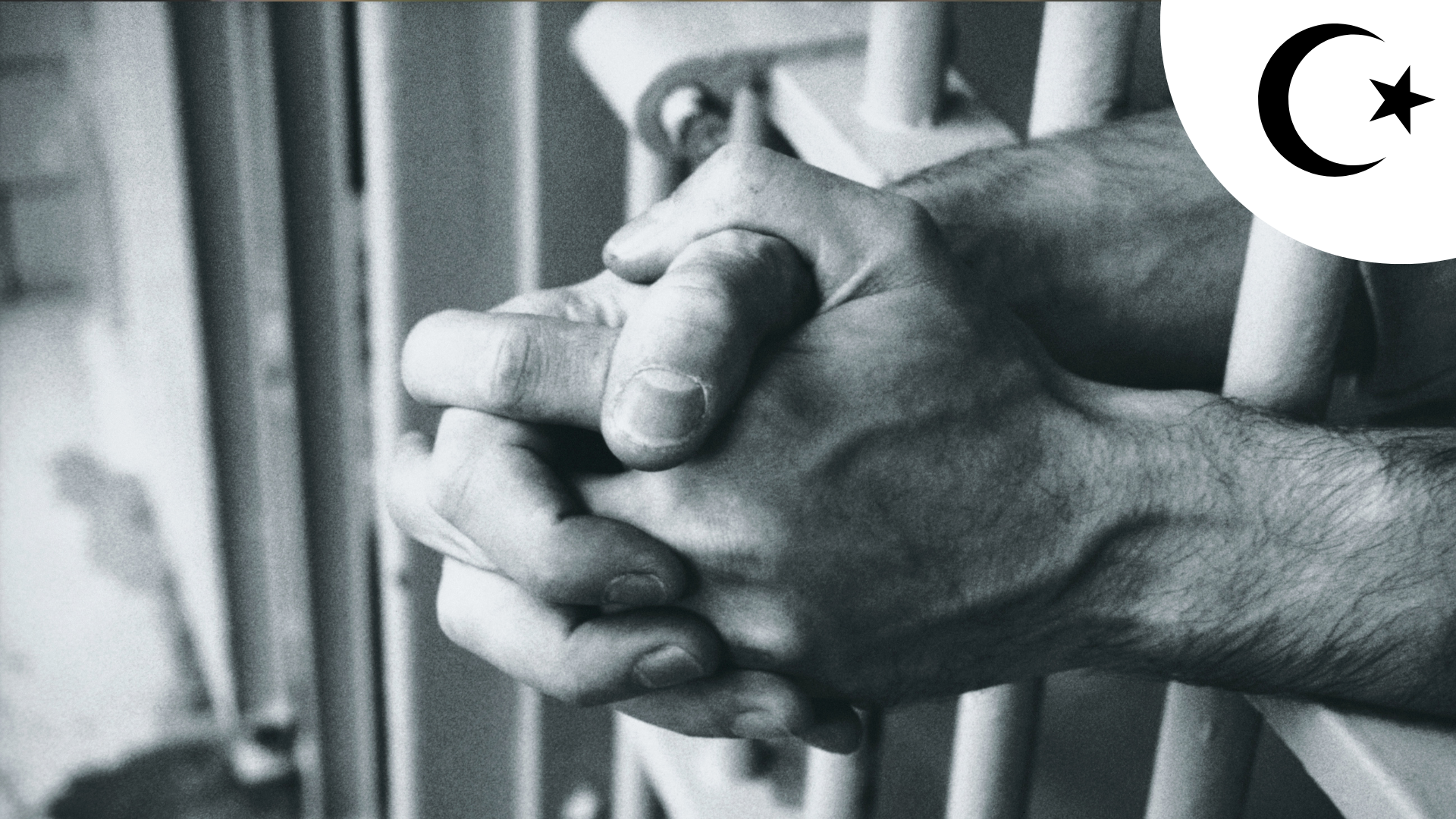
The release of an innocent prisoner is regarded in the light of the Qur’an and Sunnah as a great virtue and act of worship, because in Islam stopping oppression, helping the oppressed, and establishing justice are fundamental commands.
In the Light of the Qur’an
1. Command to help the oppressed:
“And what is [the matter] with you that you fight not in the cause of Allah and [for] the oppressed among men, women, and children…”
(Surah An-Nisa 4:75)
Freeing innocent prisoners falls under helping these weak and oppressed people.
2. Command of justice:
“Indeed, Allah commands justice and excellence.”
(Surah An-Nahl 16:90)
Keeping an innocent person imprisoned is injustice, while securing his release is true justice.
In the Sunnah of the Prophet ﷺ
1. The Prophet ﷺ said: “Free the captives.” (Sahih al-Bukhari, Hadith 5373)
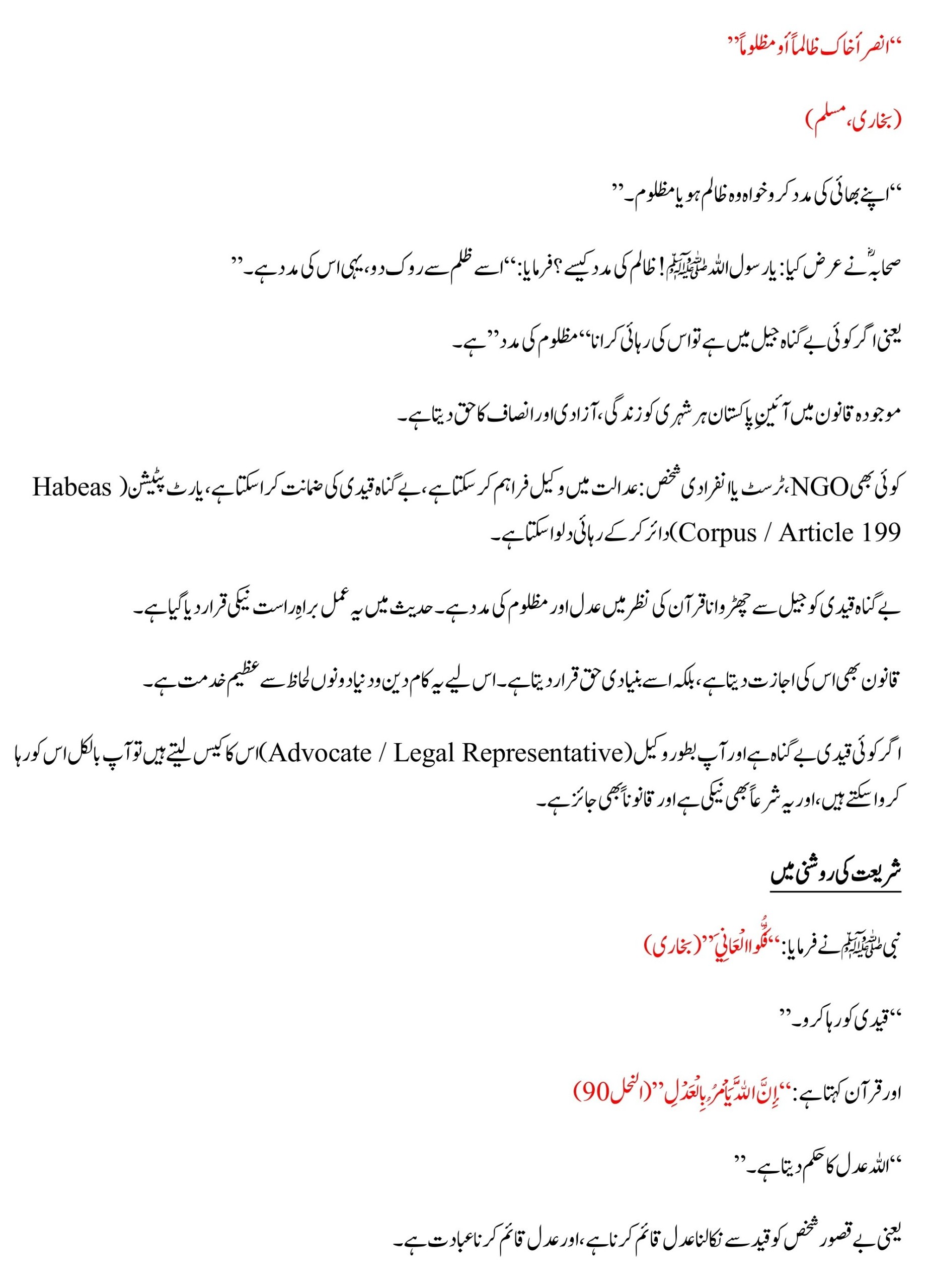
2. The Prophet ﷺ also said: “Help your brother, whether he is an oppressor or oppressed.”
(Sahih al-Bukhari, Sahih Muslim)
The Companions asked: “O Messenger of Allah, how can we help him if he is an oppressor?” He ﷺ replied: “By preventing him from oppression—that is how you help him.” Therefore, if someone is wrongfully imprisoned, securing his release is counted as helping the oppressed.
In the Current Law
The Constitution of Pakistan guarantees every citizen the right to life, liberty, and justice.
Any NGO, trust, or individual can:
Provide a lawyer in court, Arrange bail for an innocent prisoner, Or file a writ petition (Habeas Corpus / Article 199) for his release.
Freeing an innocent prisoner is justice in the sight of the Qur’an and an act of helping the oppressed. The Hadith declares it a direct act of virtue. The law also permits and protects it, considering it a fundamental right.
Therefore, this deed is a great service both in the eyes of religion and law.
“Freeing Innocent Prisoners in Islam and Law”:
This is indeed a very important topic. If a prisoner is innocent, then as a lawyer or legal representative, taking up his case and securing his release is not only permissible under the law, but it is also considered a great virtue in Islam.
In the light of Shariah The Prophet Muhammad ﷺ said: “Free the captives.” (Bukhari) And in the Qur’an Allah commands: “Indeed, Allah commands justice.” (Surah An-Nahl, 16:90)
This means that freeing an innocent person from imprisonment is the very essence of justice, and establishing justice is itself an act of worship.
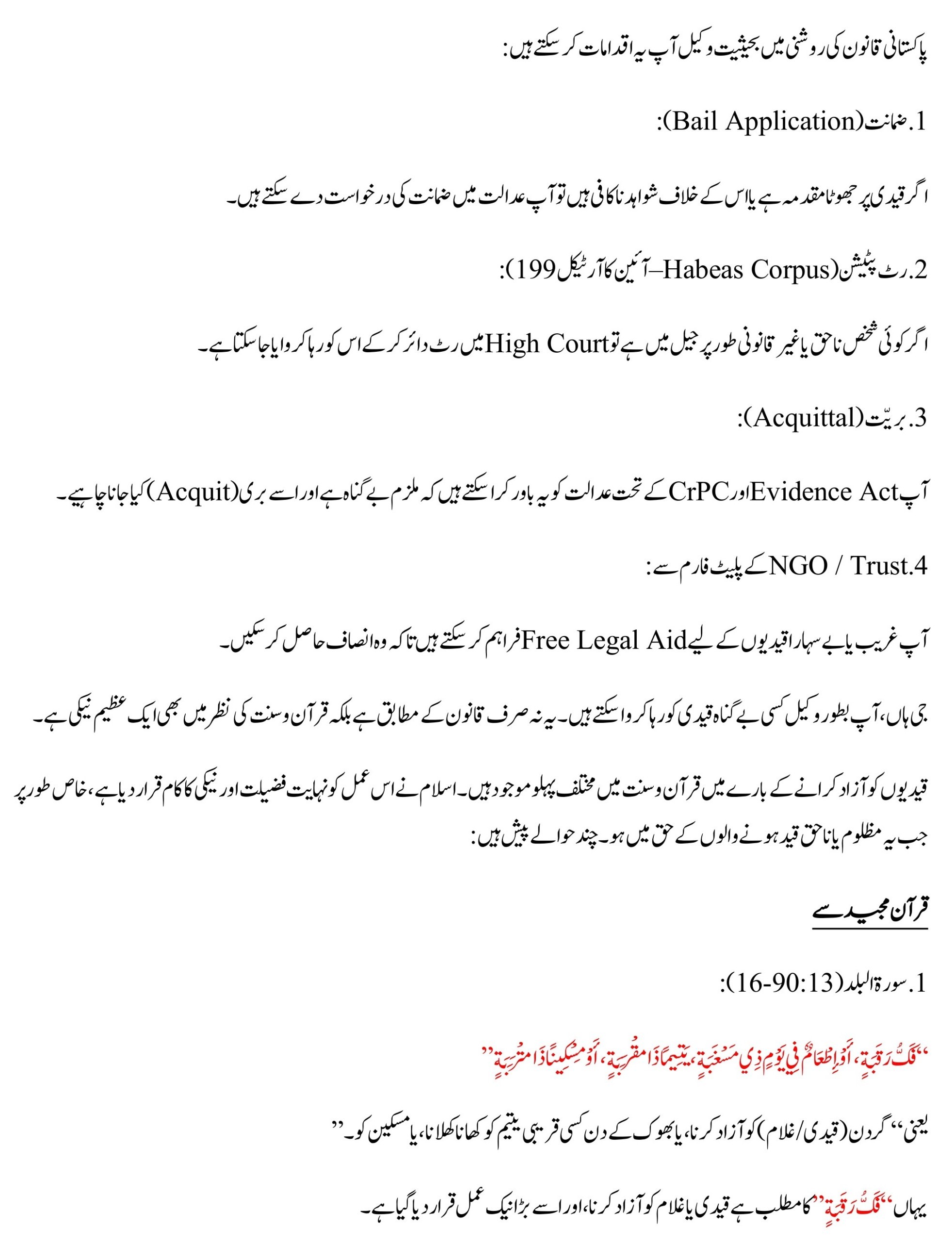
In the light of Pakistani Law As a lawyer, there are several legal measures available to secure the release of an innocent prisoner:
1. Bail Application:
If the case is false or evidence is weak, you can apply for bail in court.
2. Acquittal:
Under the Evidence Act and CrPC, you can convince the court that the accused is innocent and deserves acquittal.
3. NGOs and Legal Aid:
Through NGOs or trusts, free legal aid can be provided to poor and helpless prisoners so that they can also access justice.
Therefore, yes—securing the release of an innocent prisoner is possible both legally and religiously. In the eyes of the law, it is a right, and in the eyes of Islam, it is a noble act of worship and compassion.
Freeing Prisoners in the Light of the Qur’an and Sunnah.
Islam has declared the act of freeing captives and slaves as a noble and virtuous deed, especially when it involves those who are oppressed or wrongfully imprisoned.
From the Qur’an
Allah says in Surah Al-Balad (90:13-16):
“To free a slave (captive), or to feed on a day of hunger an orphan near of kin, or a needy person lying in the dust.”
“freeing a neck” refers to liberating a prisoner or a slave, and it is mentioned among the greatest righteous acts.
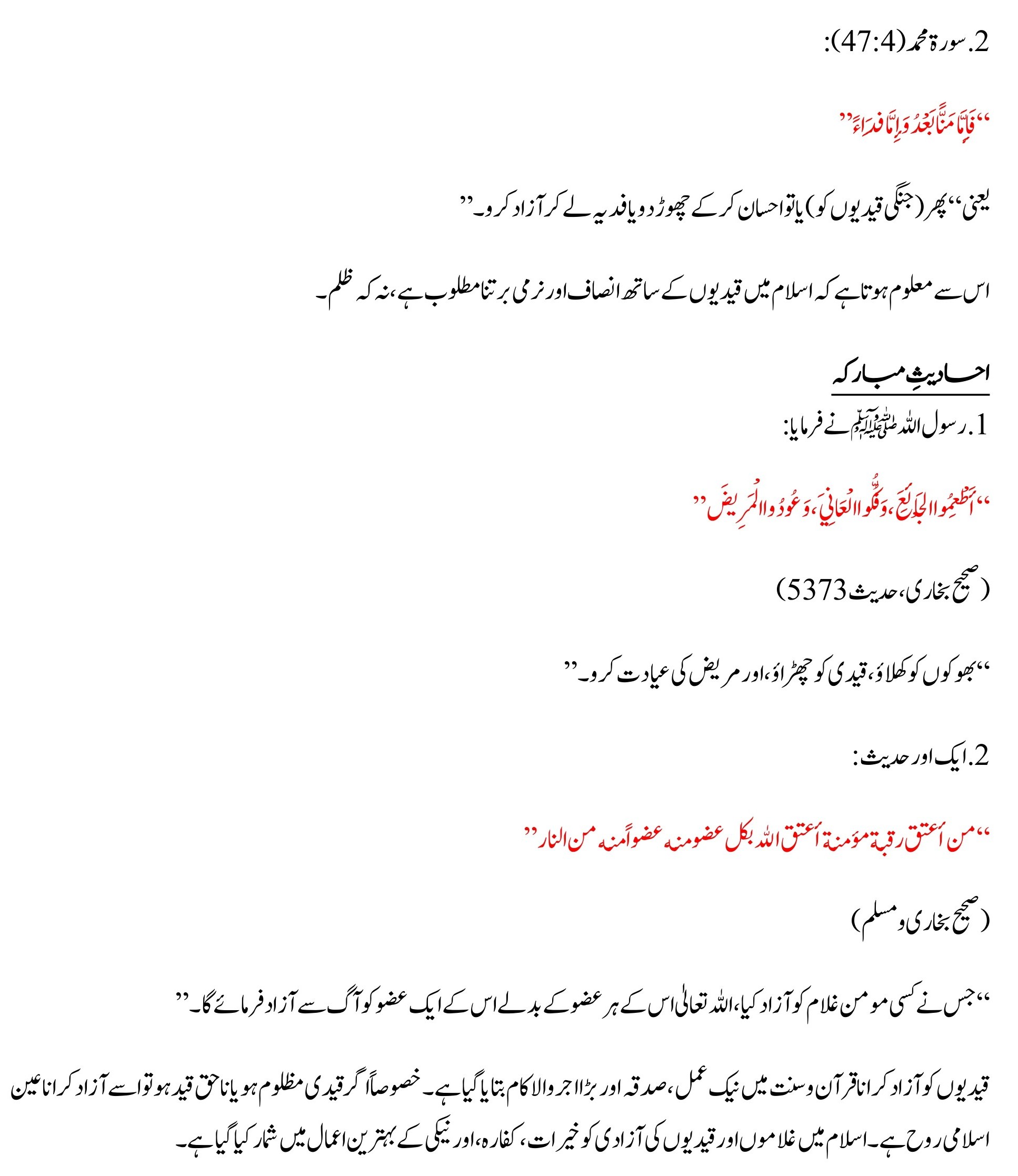
In Surah Muhammad (47:4) Allah commands:
“Then afterwards (set them free) either by grace or by ransom.”
This shows that Islam emphasizes justice and kindness in dealing with prisoners, not cruelty or oppression.
From the Sunnah
The Prophet ﷺ said:
“Feed the hungry, free the captives, and visit the sick.”
(Sahih al-Bukhari, Hadith 5373)
,In another Hadith:
“Whoever frees a believing slave, Allah will free every part of his body from the Fire in return for every part of the slave’s body.”
(Sahih al-Bukhari & Sahih Muslim)
Freeing prisoners is described in the Qur’an and Sunnah as an act of charity, righteousness, and a deed with great reward.
Especially if the prisoner is oppressed or wrongfully jailed, working for his release is in complete harmony with the spirit of Islam.
Indeed, the emancipation of slaves and prisoners has been counted among the best acts of goodness, expiation, and sadaqah.
May Allah enable us to stand for justice and to help the oppressed. Ameen.